
Kadeem Samuels’ resume doesn’t exactly scream “career salesperson.”
He earned a mechanical engineering degree, wrestled at the Olympic trials, and spent time working inside a nuclear power plant before building a career as a Vector sales rep. He’s gone on to sell $3.7 million in Cutco over 14 years, consistently moving $500,000 to $600,000 a year while flying largely under the radar.
You might wonder, what is the throughline between a STEM career, the Olympics, and sales?
Someone who shows up.
The discipline that got him through his engineering program, kept him alert across 72-hour shifts at the plant, and carried him to the trials is the same discipline that shows up behind a Cutco booth.
Wrestling didn’t teach Kadeem to sell.
But years of it, alongside the engineering training and a high-stakes day job, forged a set of habits that serve a sales career unusually well.
Below, we break down the specific practices and lessons behind his success, the kind any rep can start applying to their own business right away (no Olympian status required).
Excerpts from this article were originally recorded in the “No Base Pay” podcast.
1. Keep calm under pressure

Kadeem wrestled at a high level for years, eventually competing at the Olympic trials, a tier of competition most athletes never reach. At that level, there’s no such thing as an easy opponent. Kadeem was fully aware of how every person across from him had already proven themselves—four-time All-Americans, national champs, former world champs:
Everyone you wrestle is as good or better on their best day than you are.
Before one international tournament, he skipped researching his opponent entirely. He won the match, then found out afterward that the man he’d just beaten was ranked number one in the country and expected to represent the U.S. at the next major event.
Kadeem stayed calm even when the stakes were high. This kind of level-headed approach has served him well as a sales representative. In many ways, selling is a form of performance—you put yourself in front of people and convince them to make a purchase. Skilled sales reps like Kadeem don’t let that performance pressure get in the way of making a sale.
2. Go for discipline vs. motivation
Kadeem doesn’t wing his schedule. His entire year is planned out in advance, down to which weeks are built around events and which are built around training.
During a normal week, he’s lifting three days, running two, and wrestling after his lifts. On a lighter week, he still trains at least three times. None of it depends on how he feels that day.
That same instinct for planning carries over to event days. He never eats anything that requires two hands, since a customer can walk up mid-bite and there’s no time to finish chewing before launching into a demo. He skips fried food and sugar entirely, not for health reasons, but because they cost more energy than they give back (especially when he needs to stay sharp at the booth for hours at a time).
None of this comes from motivation alone. Kadeem built these systems to help him perform optimally—on the mat or at the sales convention.
3. Learn to read the room
One year, Kadeem decided to focus entirely on what customers weren’t saying. Working with a mentor, he studied nonverbal cues: body language, tone shifts, the small signals that show up when someone is about to say they’re not interested.
He learned to connect certain personality types to certain objections before they ever came up. If someone carried themselves a certain way, Kadeem could often predict which objection cycle was coming and adjust his approach before it happened.
What he’s describing has a name in sales training: objection prevention (not the same as objection handling). That kind of awareness doesn’t replace actively listening to what a customer actually says. It just means Kadeem isn’t caught off guard. By the time an objection shows up, he’s already several steps ahead of it, which gives him a huge sales advantage.
Related: Coded Language at work: What Your Boss, Colleagues, and Hiring Managers Really Mean
4. Play the long game
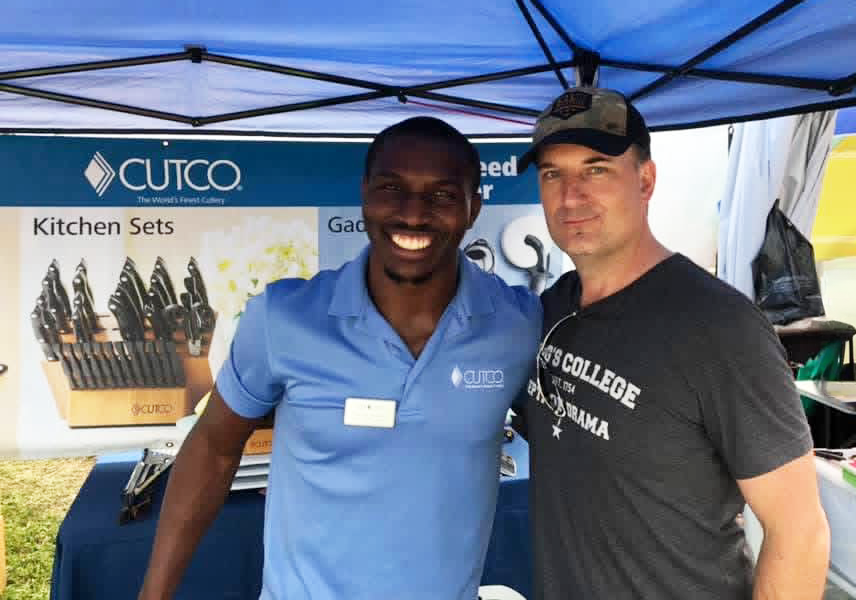
One of Kadeem’s biggest sales ever started with a customer who told him, almost in passing, to keep in touch. So he did, checking in every few months for six or seven years.
The follow-up wasn’t constant or pushy. Of the 16 touchpoints he made each year (text, calls, emails), he only received two to four responses, but that was enough to keep going.
His patience paid off, eventually leading to the original customer referring a friend. One day, the friend left Kadeem a voicemail:
Hey, I want to spend $10,000 with you. Call me back.
Kadeem was floored.
The relationship kept growing from there, with the company placing repeat orders every few months, eventually building to a single order between $54,000 and $57,000.
Wrestlers train for years for a single match that might last minutes. Kadeem applied that same patience to a customer relationship that took years to pay off, and it lead to one of the biggest single orders of his career.
5. Invest in mentorship
Kadeem has invested in mentorship and coaching throughout most of his career, even after years of strong sales. New reps often hesitate to spend money on coaching, but he compares it to the cost of working a high-paying event.
A rep might spend $600 to work a multi-day event and walk away with $3,000 to $5,000 in sales. Nobody questions whether that’s worth it. To Kadeem, mentorship works on the same principle, just over a longer timeline: a smaller, recurring cost that pays off over the course of a year instead of a weekend.
The other difference is what you keep. Event income stops the moment the event ends, but the knowledge from a good mentor stays with you and compounds every time you apply it.
That willingness to keep learning, even after 14 years and $3.7 million in sales, is its own kind of discipline. The same instinct that pushed him to keep training as a wrestler is what keeps him investing in his own growth as a sales rep.
Related: How to find a career mentor
Kadeem’s story isn’t really about a wrestler who became a salesman.
It’s about a person who built an operating system in every arena he entered—the engineering program, the plant, the mat, the booth—and then ran it, day after day.
That’s a true Olympic mindset at work.

You don’t have to qualify for the trials to adopt this kind of discipline. When motivation is running low, it’s that commitment to consistency that will keep you going: thoughtful preparation, staying grounded when the pressure spikes, and showing up even when you don’t feel like it.
That’s what Kadeem did.
And so can you.
➡️ Ready to give sales a try? Request an interview.
To hear Kadeem break all of this down in her own words, listen to his full episode on the No Base Pay Podcast.
Editor’s note: Kadeem’s story reflects his own experience and should not be viewed as representative of every Vector career. Like any performance-based profession, individual results vary based on factors including time invested, skill development, goals, and personal effort.