
You’ve had this conversation at least once, maybe just with yourself. You need a job and you’re searching up options: retail at the mall, waiting tables on weekends, or this sales rep thing a friend mentioned.
On the surface they all sound like “jobs you work while you’re in college.” But the day-to-day, the pay, and what you walk away with are genuinely different.
There are benefits to sales and more traditional student jobs. This article aims to actually compare them, so you can pick based on what fits your life and goals—instead of whichever posting you saw first.
Retail and food service do a lot of things well
Many students enjoy these aspects of the job:
You know exactly what you’re getting. Hourly pay means your check is predictable before you clock in. No guessing, no feast or famine. If you need to know your exact take-home before rent is due, that certainty is worth something a commission structure can’t promise.
The ramp-up is short. Most retail and food service jobs train you in a shift or two on the register, menu, and basic customer service. You’re contributing almost immediately, and there’s comfort in a job you can fully learn within a week.
The job stays at the job. Clock out, and you’re done. For a student stacking a heavy course load, that clean boundary between “work mode” and “everything else” can matter more than the paycheck.
It’s a known quantity to employers, too. Almost every hiring manager has done a stint in retail or food service themselves. It reads as normal, it’s easy to talk about in an interview, and it signals reliability and teamwork without you having to explain what the job even was.
There’s real camaraderie. Working a shift alongside the same small crew, some of the closest friendships can come out of surviving a rush together.
Those are legitimate reasons to take one of those jobs, and it’s a good fit for plenty of students.
A sales role does something different
It’s not that sales is “harder,” but what’s being asked of you is very different.
You’ll be s t r e t c h e d (and that’s a good thing). Real business outcomes depend on your growth. To succeed at the job, you must get better at reading people, handling objections, and closing. That growth comes from continued practice, adapting as you go. And those transferable skills? Invaluable.
You’ll learn the art and science of persuasion. Researchers who study persuasion (Robert Cialdini’s work is the standard reference) have spent decades documenting why some people consistently get better outcomes in a conversation than others. And those persuasion techniques are exactly what sales reps are practicing on a daily basis.
The learning curve is real. At a good sales job, you’ll receive training and support (crucial, especially if you don’t have experience). But it’s worth noting that it takes time to ramp up…and resilience to keep going. If you push through the first month, you’ll surprise yourself.
Your paycheck moves with your effort, for better or worse. Income is tied to your effort instead of an hourly rate (more on that below), though Vector Marketing does offer a guaranteed base pay per qualified appointment.
Sales teams are tight-knit, too (and even enjoy some friendly competition). Many sales reps have met some of their best friends working at Vector, and built a professional network that’s pretty rare for college students.
Related: What To Expect When You Start as a Sales Rep at Vector Marketing
Pay: steady vs. uncapped
Nationally, retail sales workers earn a median of $17.03 per hour, with a mean of $17.94, according to the Bureau of Labor Statistics’ most recent wage survey. In practice, student-facing retail postings commonly range from about $13 to $20 per hour depending on state and employer.
In food service, you can earn an hourly wage plus tips, which can be meaningful on a good night and much less so on a slow one. Weather, shift, and table luck all play a role.
BLS puts the median at $16.98 per hour for food preparation workers and $16.06 per hour for food and beverage serving workers like servers and hosts. That second figure is meant to include reported tip income, but real take-home pay for tipped roles varies a lot by venue and shift (well above or below the average, depending on whether it was a good night or a slow one).
In sales, pay is tied to what you produce. Student sales rep positions at Vector Marketing offer a base pay between $20 and $28 per qualified appointment. That means every time you show Cutco, you’re compensated just for showing it. How many appointments you complete in a week is up to you.
But the base pay is only the minimum. The real upside is that the relationship between effort and $$ earned isn’t capped the way an hourly rate is. Commission-based reps can out-earn their hourly peers by a wide margin, particularly once they’ve built up some experience (though of course results vary by person and effort).
At Vector, reps earn commission based on how much they sell. The best part is once you hit a certain commission level, you never earn less going forward.
Related:



Schedule: who’s actually in control
Retail and food service both advertise “flexible scheduling,” which is true to a degree. There’s less wiggle room when something comes up and less opportunity to scale back during busy times (i.e., studying for finals). Shift-based work still runs on someone else’s staffing spreadsheet. In a sales role like Vector, you benefit from flexibility AND the holy grail of perks—autonomy:
@workingstudentlife Vector marketing explained: autonomy vs. flexibility… whats best for you? #workingstudent #vectormarketing #vector #cutco ♬ original sound – The Vector Impact
You book your own appointments around your classes, practice, or whatever else is going on that week. That’s a structural difference, but you do need to keep this in mind: Nobody is building the schedule for you. If you don’t schedule appointments, there’s no shift to fall back on. This type of sales role rewards self-management and initiative and can be harder for someone who wants a manager telling them when to show up.
Skills and resume value
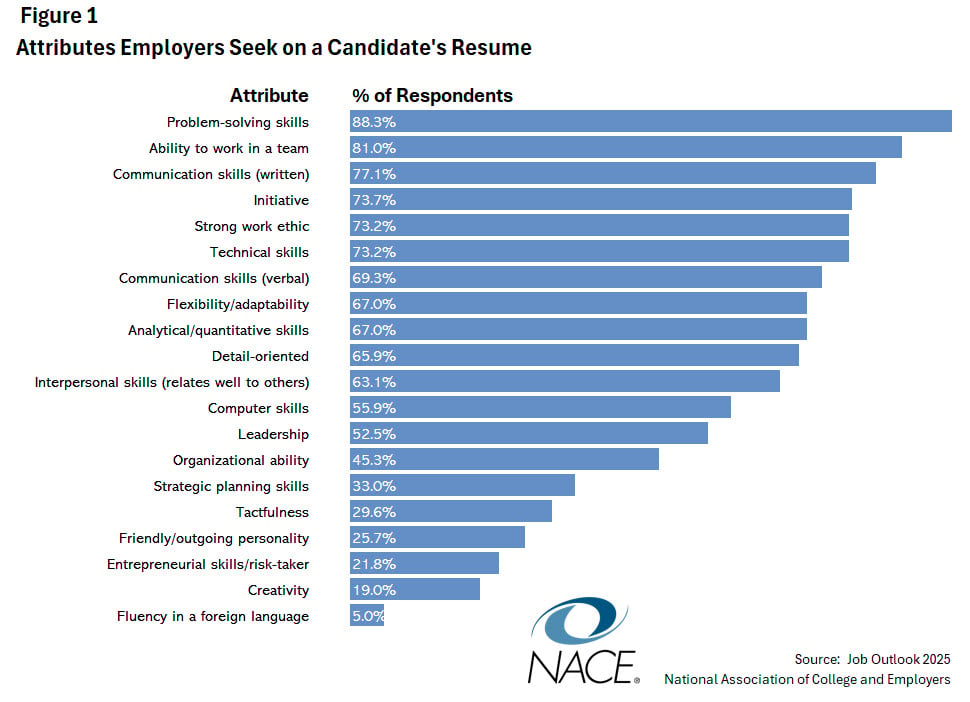
Retail and food service build reliability, teamwork, and customer service—skills that genuinely matter and most jobs value. In the National Association of Colleges and Employers’ Job Outlook 2025 survey, close to 80% of hiring managers ranked teamwork as a top attribute and roughly 70% ranked strong work ethic the same way.
A legit sales role, like Vector Marketing, develops problem-solving, communication, and initiative (skills that also top NACE’s list) through a robust training program and ongoing mentorship. The skills learned in sales take longer to build, but they tend to transfer further—into interviews, other careers, or situations that have nothing to do with sales.
Arguably, for many student jobs, you get out of it what you put into it. But not all jobs have the same opportunities for growth. When deciding what type of student job is best for you, consider NACE’s manager survey (see graph below) and spend some time really thinking about: What skills do I want to build? Which job will help me practice and refine my target skills? Which job will best prepare me for my future career?
The side-by-side comparison
| What To Consider | Retail or Food Service Job | Vector Sales Rep |
|---|---|---|
| Pay structure | Steady hourly wage, same every shift (some food service workers do earn tips). Retail median: $17.03/hr Food service median: $16.06 - 16.98/hr (including tips, depending on role; see pay section above) | Fluctuates depending on results. $20-$28 base pay per appointment (varies depending on office and location) 10-30% commission with bonus opportunities all the way up to 50%. The percentage earned is based on overall career sales. |
| Predictability | Relatively high. Set schedule and hourly rate. Some pay fluctuation for food service workers that rely on tips. | Lower. Slow weeks and strong weeks are common. Time and effort dependent. |
| Schedule | Set by a manager, often including nights and weekends. | You book your own appointments around classes. |
| Skills you build | Reliability, teamwork, customer service. | Communication, time management, handling objections, self-motivation, discipline |
| Resume value | Solid, common, recognizable by employers. | Distinctive—signals initiative and people skills if you can speak to results. |
| Ramp-up | Learn the register or restaurant ropes in a day or two. | Real learning curve; the first month is the hardest. |
| Pay ceiling | Raises are typically small and slow. | Your effort more directly moves your earnings. |
So which one is right for you?
This isn’t a skills debate. It’s a question of what you want your job to do for you.
If you need a job with zero ramp-up, a predictable check, and a hard line between work and everything else, retail or food service will deliver exactly that.
If you’d rather trade some of that predictability for a job that’s teaching you something most weeks, where your paycheck reflects your effort more directly, and where you’re building communication skills that carry into whatever you do after graduation, that’s the case for a sales role.
There’s no universal right answer. But every shift and every appointment is shaping future you—the person who shows up to the next interview, the next job, and the next hard conversation. So, take some time and get honest about your goals, the skills you want to build, and the person you want to become. Whatever you do, do it on purpose.
Vector Marketing has been working with students and young professionals since 1981. Want to learn more about our student sales rep opportunities? Request an interview here.